About EditFlow Academy

An editing workflow written by people who cut video every day

EditFlow Academy publishes the working method our editors use on short-form productions. The guides describe the order of operations, the decisions that matter and the shortcuts that remove repetitive work.
Where the workflow came from

The order of operations was the discovery

We did not set out to write a method. We noticed that two editors working on the same footage produced different amounts of work, and the difference was not skill: it was sequence. The editor who locked structure before pacing finished in half the time with a better result.

Since then the workflow has been written down, tested with new editors, and simplified until every stage has exactly one question attached to it. That version is what you find on this site.

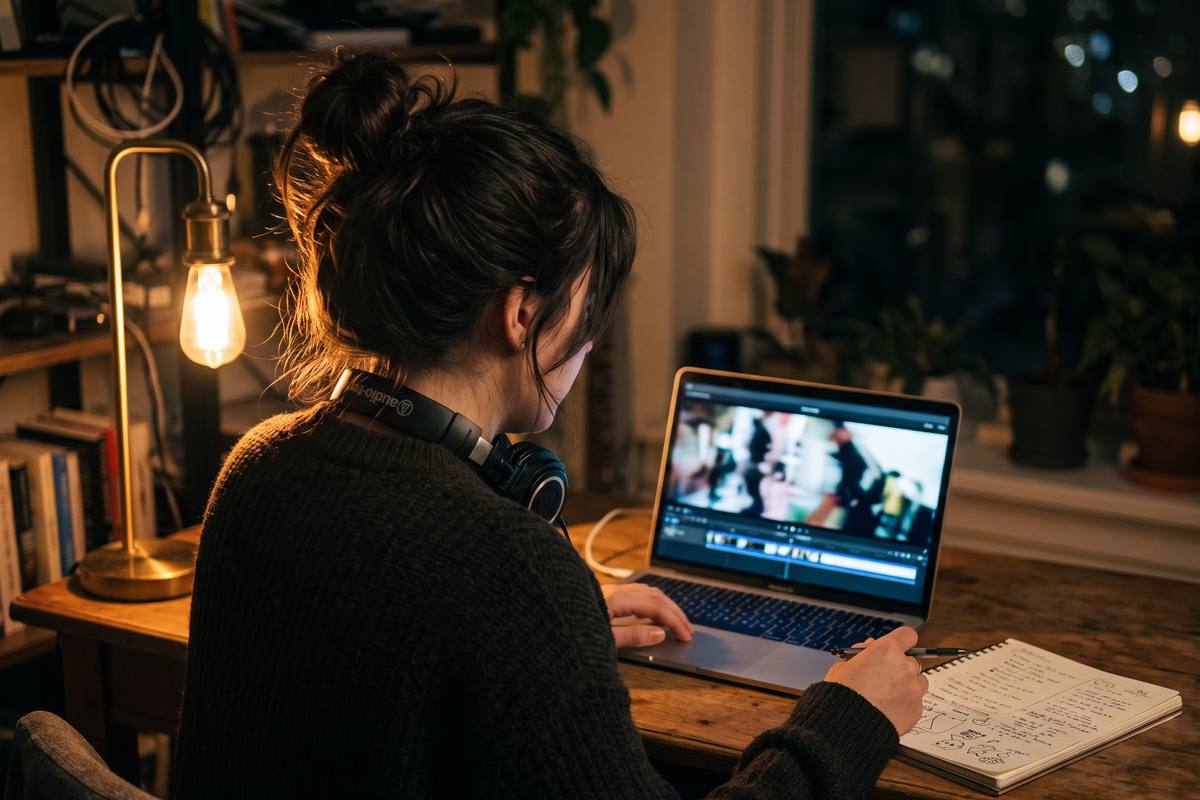
Editor reviewing footage on a laptop

Working principles

Three rules that shape every guide

They come from long projects, tight deadlines and the mistakes that cost the most time.

One question per stage

Every stage of an edit answers a single question. If a decision belongs to another stage, it waits, which is what keeps an edit from looping.

Tool independence

Techniques are described so they work in free and paid editors alike. The workflow is the transferable skill, not the interface.

Test on the smallest screen

A finished clip must read on a phone at arm's length. If it only works on an editing monitor, it is not finished.

Method

How a guide is produced

  1. Apply it on client work

    A technique is used on real deadlines first, with the time it saves recorded rather than estimated.

  2. Reproduce it on free software

    Every step is repeated in a free editor to confirm that the technique does not depend on a paid feature.

  3. Write it as an order of operations

    The guide describes what happens first, second and third, because sequence is where most editing time is lost.

  4. Review against finished films

    Finally the result is checked in published videos to confirm the technique survives final delivery.

Editorial desk

Who writes and reviews

Guides are written by working editors and reviewed collectively before publication, so the credited roles matter more than individual names.

Senior editor

Pacing and structure guides

Owns the five-stage workflow and reviews every pacing recommendation against finished timelines.

Caption and accessibility

Text and legibility guides

Checks caption sizing, contrast and margins against real device interfaces.

Finishing editor

Colour and export guides

Responsible for the colour pass, export settings and the final quality check on published clips.

Contact

Send us a timeline that is fighting you

Tell us where the edit stalls, what software you use and how long you have. We reply to every message and use the common problems to update the guides.